01Chest / Push
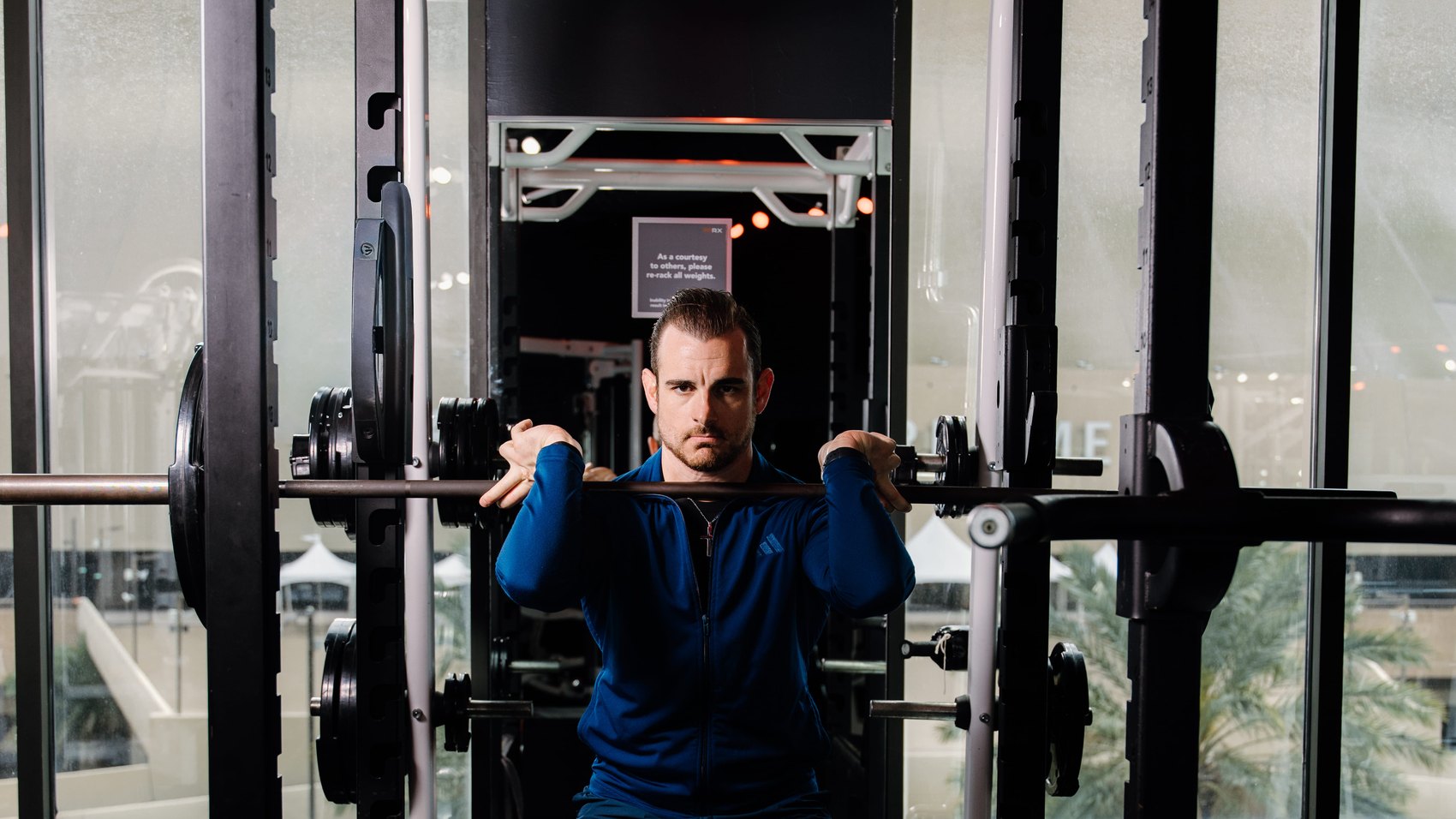
Upper Chest Carver
Incline-biased pressing with slow eccentrics. Built to fill in the shelf above the chest, not just move heavy weight.
- Upper Chest
- Front Delts
- Triceps
- Time
- 110 min
- Goal
- Hypertrophy
- Level
- Intermediate
Build a session around your body, your goal and the time you actually have. Run the clock. Or take one of mine and go.
No sign-up. No coaching packages. Just the system.
A custom GPT built on the same programming principles I use for my own sessions. Tell it what you’re training, what equipment you have, and how much time you’ve got.
BriefToday I'm training Back / Pull. My goal is Definition. I have 60 minutes. I'm intermediate. Build me a workout using your standard framework: ~20 min warm-up, 5 supersets of 2 exercises with tempo and cues, a conditioning block, and a finisher.
Powered by ChatGPT. Programmed around the same principles I use myself.
Always modify workouts to your ability, experience, equipment, and physical limitations.
Four timers I actually use. Pick one, hit start, put the phone down.
Count up until you stop it.
The screen stays awake while a timer is running, and the sound works with the phone unlocked and this tab in front. Numbers are read from the clock rather than counted up, so the time stays accurate however long you run it.
These aren't theoretical workouts. This is how I actually train.
Incline-biased pressing with slow eccentrics. Built to fill in the shelf above the chest, not just move heavy weight.
Vertical pulling for width, horizontal rowing for thickness, and controlled biceps work that doesn't turn into a swinging contest.
Long ranges, slow eccentrics and a lot of time in the bottom. This one shows up in the mirror and in the stairs the next day.
Short rest, high quality, occlusion-style finishing work. Arms only — and they will know it.
Olympic-adjacent power work up front, then a conditioning piece that decides how honest you were about the warm-up.
Thirty minutes of honest functional conditioning. No strength work, nowhere to hide, done before you can talk yourself out of it.
The back of the body is what makes you fast, keeps you upright and holds everything together. This day pays that bill.
Round delts are built with volume, angles and patience — not one heavy press. Lots of lateral work, controlled.
Change of direction, foot speed and deceleration. The stuff that keeps you an athlete instead of just a guy who lifts.
Anti-extension, anti-rotation and real flexion work. Abs are trained, not just revealed — but you still have to eat like it.
One session that touches everything — push, pull, hinge, squat, carry, and an engine piece at the end. The travel day workout.
Hills, wind and no machines. The simplest hard workout there is — and the one most likely to get skipped.
Every one of these is a session I’ve actually run. Adjust loads, movements and volume to your own body and equipment.
Structure creates intensity. Variety keeps the body adapting.
The exercises change constantly. The architecture almost never does. Nearly every session follows the same four blocks — which is exactly why I can push hard inside it without thinking about what comes next.
Cardio + mobility + dynamic stretching
Raise temperature, improve movement quality, prepare the joints before anything gets loaded.
Rotating exercises keeps training from going stale — new stimulus, new angles, new weak points exposed — while the philosophy underneath stays identical. You always know what the session looks like. You just don’t know what’s in it.
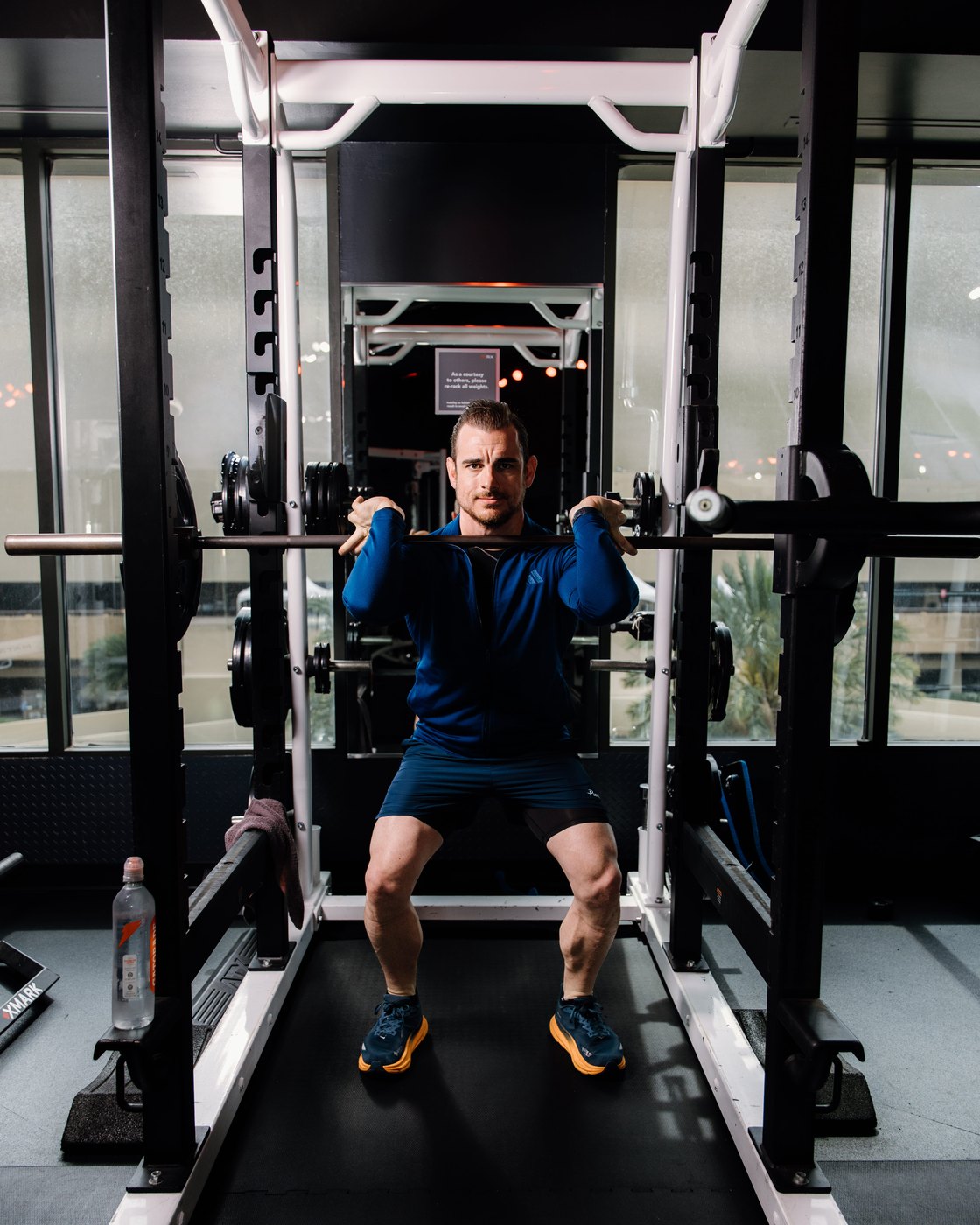
You don’t need my exact workout. You need a system you can actually follow. Use mine as a starting point, change what needs changing, and start stacking days.
Free resource. No coaching pitch. No BS.